Orthopaedics

Orthopedic Doctor in Ahmedabad | Dr Saurin Shah
Orthopaedics

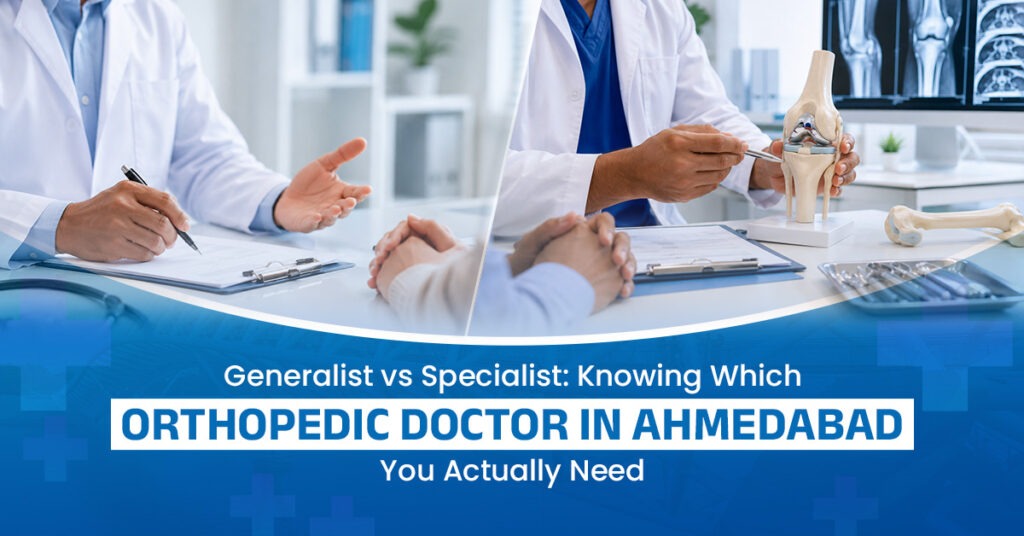
Generalist vs Specialist: Knowing Which Orthopedic Doctor in Ahmedabad You Actually Need

Joint pain forces your world to shrink. You stop walking to the park. You avoid the stairs in your own house. A dull ache in your knee or a stiff hip dictates your entire daily schedule. Getting the right medical evaluation early prevents permanent damage. You usually start by looking for a doctor. The choice between a general orthopedic doctor and a dedicated joint specialist determines your recovery timeline. General orthopedic surgeons handle a wide variety of injuries. Joint replacement specialists focus Predominantly on specific mechanics. You want the exact right expert for your specific Knee issue. If you book the wrong type of doctor, you waste months on treatments that fail to fix the root problem. The right specialist looks at your X-rays and knows exactly what comes next. They map out a timeline. They give you concrete answers. Understanding the Role of a General Orthopedic Specialist General orthopedic doctors handle a massive variety of bone and muscle issues. They treat ankle sprains, simple fractures, and minor sports injuries. They are the frontline responders of the orthopedic field. If you fall and break your wrist, the generalist fixes the bone. If you develop mild tendonitis in your elbow from playing tennis, they prescribe physical therapy. They manage the early stages of arthritis very well. They prescribe anti-inflammatory medication to keep the swelling down. They suggest lifestyle modifications like weight loss or low-impact exercises. Sometimes they may prescribe pain killer or steroid injections to calm an painful joint and buy you time. These doctors are great for initial diagnoses. They run the first set of X-rays. They tell you exactly what is wrong with your body. Some injuries eventually need more focused attention. When basic treatments stop working, general care falls short. A generalist might perform 2 or 3 knee replacements a month. A joint specialist does 50+ in the same timeframe. That massive gap in hands-on experience matters deeply when someone is handling your long lasting knee pain. When Knee Pain Requires a Specialist Approach:  Knee pain usually starts small. Maybe it hurts when you stand up after sitting for a long time. Over time, the protective cartilage wears away entirely. Bone rubs directly on bone every time you take a step. The friction causes massive swelling and intense daily pain. Physical therapy and steroid injections eventually lose their effectiveness. You reach a point of diminishing returns. You might notice your knee giving out randomly while you walk down the hall. It might stay swollen for 4 or 5 days after a short walk to the grocery store. You wake up at 2 AM because your knee aches under the blankets. Conservative treatment has a hard ceiling. When you hit that ceiling, you need a surgical evaluation. A surgeon who focuses entirely on knee joints understands exactly how much damage exists inside the knee joint. They look at the mechanical alignment of your specific leg. They assess your ligament stability. They plan the exact angle for a potential joint replacement. They evaluate whether you need a partial replacement or a total knee reconstruction. Identifying the Right Surgeon for Advanced Care You want a doctor who performs joint replacements every single week of the year. High surgical volume directly correlates with better patient outcomes. The more a surgeon performs a specific procedure, the fewer complications their patients experience. Look closely at their specific medical training. A dedicated knee replacement doctor in Ahmedabad spends years mastering that 1 specific joint. They know the task perfectly. Technology matters heavily in modern orthopedic surgery. Surgeons who use robotic assistance may achieve significantly better implant alignment. The robot maps your knee in 3D before the surgeon makes the first cut. The doctor uses that digital map to place the titanium implant with sub-millimeter accuracy. Good alignment means the new artificial knee lasts decades. It feels natural when you walk. Ask your doctor directly about their complication rates during your consultation. Ask about their infection rates. Ask exactly how long their average patient stays in the hospital after the operation. Specific questions force specific answers. Understanding Hip Joint Damage and Surgical Options Hip pain usually stems from osteoarthritis. Sometimes it happens after a severe trauma or just decades of heavy physical wear and tear. The smooth cartilage in the ball-and-socket joint degrades over time. The pain typically shows up in your groin or deep inside your thigh. You might struggle to bend over and tie your shoes. Getting out of a low car seat becomes a massive physical task. You start limping to compensate for the stiffness. Surgery replaces the damaged bone with artificial parts. Modern hip replacement in Ahmedabad is an incredibly effective procedure. Surgeons remove the arthritic femoral head and place a metal or ceramic ball in its place. They line the pelvic socket with highly durable plastic. Many patients walk the very same day of their surgery. The deep, grinding arthritis pain disappears immediately after the procedure. You feel surgical healing pain for a few weeks. Mobility returns rapidly as you progress through your physical therapy protocol. Generalist vs Specialist: How to Make the Right Decision Your choice depends entirely on the severity of your daily pain. Generalists diagnose the problem and handle the early, non-invasive interventions. Specialists is prefered when surgery becomes a highly likely possibility. Specialists have access to better imaging analysis. They read MRIs with a much narrower, highly trained focus. They catch subtle joint deformities a generalist might overlook because they look at knees and hips all day long. Think about your long-term physical mobility. If you face a complex joint reconstruction, you want the person who does nothing else. You want the obsessive joint expert. Consider these specific factors when booking your next medical appointment: Recent sprains or sudden mild pain: Book an appointment with a generalist. Daily chronic pain that limits your walking: See a joint specialist immediately. Months of failed physical therapy: Consult a specialist for advanced options. Need a second opinion on an

Orthopedic Doctor in Ahmedabad | Dr Saurin Shah
Orthopaedics

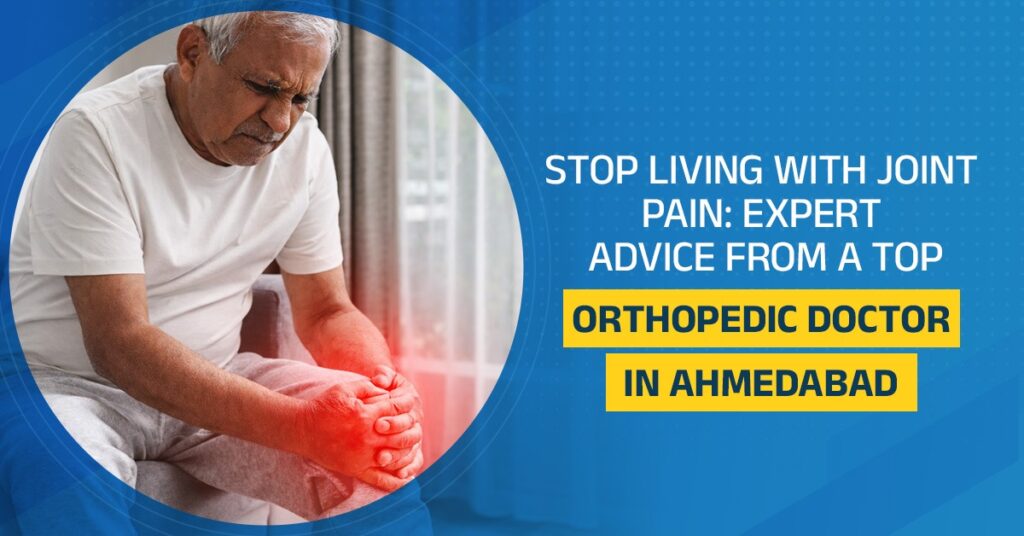
Stop Living with Joint Pain: Expert Advice from a Top Orthopedic Doctor in Ahmedabad

Joint pain is a big issue that affects millions of people every single day. For many, it starts as a mild ache. Over time, it can become a serious problem. It makes simple, everyday tasks feel impossible. Walking, bending, or even sitting for long periods can hurt. Many people ignore these early signs. They assume the pain will just fade away on its own. Unfortunately, this is a common mistake. Ignoring the pain often makes the underlying condition worse. This is why seeking expert advice is absolutely crucial. A top orthopedic specialist can diagnose the exact problem. They can offer the right treatment to restore your mobility. Do not let joint pain stop your life. There are proven ways to manage and treat it effectively. Common Causes of Joint Pain: Identifying the Root Issues Joint pain does not happen without a reason. Knowing the exact cause is the very first step toward finding relief. Several different factors can trigger this discomfort. Arthritis This is one of the leading causes of joint pain worldwide. Osteoarthritis happens when the smooth (protective) cartilage wears down. This occurs slowly over time. Rheumatoid arthritis is very different. It is an autoimmune disease. It causes your own body’s immune system to attack its own joints, leading to painful swelling. Both conditions require immediate medical care. Injuries and Trauma Accidents happen unexpectedly. A sudden fall or a sports injury can severely damage your joints. Sprains, strains, and bone fractures are common culprits. Sudden trauma needs urgent medical attention. Quick treatment prevents long-term, permanent damage. Overuse or Repetitive Stress Many modern jobs require repetitive physical motions. Typing on a keyboard, heavy lifting, or standing all day can stress your joints. Athletes also face this issue frequently. Tendinitis is a common result of this overuse. Giving your joints proper rest is highly important. Age-Related Factors As we grow older, our bodies naturally change. Cartilage naturally wears down over the decades. The lubricating fluid inside our joints decreases. This makes joints feel stiff and painful in the morning. Aging is entirely natural, but living with severe, debilitating pain is not. When to Seek Help: Knowing the Right Time Occasional aches after a long day are normal. Constant, sharp pain is not. You need to know exactly when to see a doctor. Do not wait until the pain becomes unbearable. Early treatment always yields better results. Identifying persistent or worsening symptoms Watch out for pain that lasts more than a few days. Notice if the pain gets significantly worse at night. Look closely for swelling, noticeable redness, or unusual warmth around the joint. If you cannot put any weight on your leg, get help immediately. These are serious red flags. How joint pain can affect daily life and mobility Joint pain quickly robs you of your personal freedom. It makes climbing a flight of stairs a massive chore. It stops you from playing with your children or grandchildren. It can even disrupt your sleep patterns. When pain actively limits your daily activities, it is time to take action. You deserve to regain your mobility with proper care. The Role of Orthopedic Specialists: How They Can Help You do not have to fight chronic joint pain alone. Orthopedic specialists are here to guide you. They are highly Qualified and trained experts in the human musculoskeletal system. They know your bones, joints, ligaments, and muscles inside out. The expertise of an orthopedic doctor in diagnosis and treatment A general physician is great for basic healthcare. However, severe joint pain requires a dedicated specialist. Orthopedic doctors use advanced diagnostic tools. They utilise X-rays, MRI scans, and specific blood tests. They figure out the exact root cause of your pain. Then, they provide highly targeted treatments. This can include specialised medication, guided physiotherapy, or targeted injections. In some severe cases, minimally invasive surgery is the best option. Importance of personalised care plans for joint pain Every single patient is unique. What works perfectly for one person may not work for another. Top orthopedic doctors create highly personalised care plans. They carefully consider your age, your daily lifestyle, and your overall health. A tailored approach always ensures the best possible results. It significantly speeds up your recovery time. Real-life Experiences of Patients in Ahmedabad Many people across Ahmedabad have successfully overcome severe joint pain. Their real-life stories offer immense hope. You can find lasting relief, just like they did. Share inspiring patient stories Consider the story of a local teacher who struggled to stand in class due to severe knee pain. After consulting a top specialist, they received a custom treatment plan. Within just a few months, they were walking to the classroom without pain. Another patient suffered from chronic shoulder pain for years. It completely stopped them from playing amateur tennis. With expert physical therapy and medical guidance, they are finally back on the court. Highlight positive outcomes from seeking expert care These stories clearly show the power of expert orthopedic care. Patients consistently report less pain and much greater mobility. They sleep better at night. They enthusiastically return to their favourite hobbies. They regain their personal independence. Expert medical care truly changes lives for the better. How to Find the Right Orthopedic Doctor in Ahmedabad Choosing the right doctor is a critical decision. Ahmedabad has many excellent medical professionals. However, you need to find the absolute best fit for your specific needs. Tips on choosing an experienced and trustworthy specialist Start by carefully checking their medical credentials. Look for board-certified orthopedic surgeons with strong backgrounds. Read patient reviews online to understand their experience. Ask your family and close friends for personal recommendations. A truly good doctor will listen closely to your concerns. They will explain complex medical terms clearly. The benefits of seeking local care from reputable clinics Local clinics offer unmatched convenience. You do not have to travel long distances for regular appointments. Reputable clinics in Ahmedabad have state-of-the-art medical facilities. They offer comprehensive care directly under one roof. This makes your

Best Orthopedic doctor in Ahmedabad | Dr Saurin Shah
Orthopaedics

How to Find the Best Orthopedic Doctor in Ahmedabad for Your Needs

In most cases, choosing a specialist doesn’t necessarily indicate that you will need a prescription to treat your condition, but rather that you place trust in them as being capable of providing for your health and well-being over the long term. Ahmedabad has one of the largest areas of excellence for healthcare providers within the world of medicine. So, how can you differentiate the best healthcare provider choice to treat your very own specific medical condition?  An informed decision regarding a healthcare provider has very strong influences on your quality of treatment provided, duration to achieve optimal recovery, and on your complete level of comfort; sometimes an informed decision may require spending time to discover the most appropriate specialist for you. To assist you in simplifying the selection process of your healthcare provider, we recommend the following points identifying the methodology required for optimal results. Step-1: Pinpoint Your Specific Orthopedic Condition If your condition matches these, find a specialist who focuses on these specific areas below: Joint Replacement: For severe hip or knees that limits daily movement. Spine Surgery: For chronic back pain. Sports Medicine: For acute athletic injuries like ACL tears or shoulder dislocations. Pediatric Orthopedics: For developmental bone and muscle issues in growing children. Trauma Care: For complex fractures and post-accident bone reconstruction. Specialized focus almost always means better medical outcomes. These specific doctors stay updated on the latest techniques in their narrow niche. This focused expertise is exactly what you want when your health is on the line. Step-2: Focus on Advanced Joint Care: Knee and Hip Replacements If you have joint pain due to damage, you may benefit from special surgery. Some common reasons someone may see an orthopedic specialist in Ahmedabad for knee or hip replacement surgery include severe deterioration of the joints. Joint replacements are both significant surgeries which greatly affect one’s life and careful consideration is given to ensuring that joint replacements are placed in their proper position so that the best chance of returning to a totally active daily lifestyle is available and to avoid the potential of experiencing an excessive amount of pain, discomfort and/or disability.  Here are several benefits given below for each type of operation: Knee Replacement Surgery: Targets Severe Arthritis: This surgery completely removes all the worn out or damaged portions of the bones and cartilage where the bone/cartilage surfaces have become severely damaged by osteoarthritis. Normal Daily Mobility: Walking, climbing stairs and bending without experiencing painful friction occurs as a result of having undergone this operation. Minimally Invasive Techniques: The utilization of minimal surgical techniques during the surgery enables you to have the correct placement of your implants. Faster Post-Operative Recovery: Because the incisions are small, less damage occurs to the joint tissues and rest of the body as a result of having had this operation, therefore, you are likely to return to health sooner after surgery than if the incision was larger. Hip Replacement Surgery: Helps with Deep Joint Pain: It will completely relieve of severe hip joint stiffness and any groin pain that may be associated with it. Improves Balance: The alignment of a new hip joint will significantly impact how you walk and how stable you are. Durable Materials: The new prosthetic components normally last 20-30 years with usual wear and tear. Offers High Success Rates: This procedure is one of the most commonly performed and successful orthopedic surgeries today. When your mobility is severely impaired, your safest bet is to find a surgeon that is performing many of these types of procedures each week. Step-3: Verify Credentials and Board Certifications Never skip the background check. A doctor’s qualifications tell a vital story about their skill level. It hardly takes 10-minutes to verify doctor details which helps you to protect from fraud and make the right decision. When you review doctor’s profile, check following credentials: Basic Medical Degrees: Check where they completed their foundational medical training. Advanced Fellowships: Look for specialized training in exact procedures like arthroplasty. Board Certifications: Ensure they have passed necessary exams to meet national medical standards. Council Registrations: Verify their active, legal status with state or national medical boards. Academic Contributions: Note if they are involved in educating their fellow colleagues. Board certification proves they currently meet the highest standards of medical practice. You can easily get the information on the doctor’s website. Step-4: Evaluate the Doctor’s Track Record and Experience You want a doctor whose hands are steady and highly practiced. Repetition leads to expertise, and the higher volume of surgery resulting in lower complication rates. Be direct in asking surgeons about their experience. A confident doctor will gladly answer: How many years have you been in active orthopedic practice? How often do you perform this exact surgical procedure each year? What is your personal success rate for this specific treatment? How do you handle unexpected surgical complications if they arise? Can you share anonymized case studies of similar patients? Experienced doctors have seen the unexpected. They know exactly how to handle complications. They can adapt their techniques perfectly to fit your unique anatomy. Step-5: Assess Hospital Quality and Local Facilities Your doctor is only one part of the equation. The facility where you receive care is equally important. Few top hospitals in Ahmedabad offer facilities with highly advanced infrastructure. Ensure the hospital or clinic features the following: Advanced Imaging: Quick access to high-quality X-rays, MRI, and CT scanners. Modern Operation Theatres: Class 100 Modular Operation theater for highly sterile environments equipped with robotic surgery tools. Dedicated Recovery Wards: Post-op wards staffed by specialized orthopedic nurses. In-House Physiotherapy: Crucial for fast, effective, and guided rehabilitation. National Accreditations: Look for quality seals from recognized health organizations like NABH. High-quality hospitals boast significantly lower infection rates. A great doctor working in a poorly equipped clinic cannot offer the best possible results. Your safety depends heavily on the  medical environment where the Doctor operates. Step-6: Analyse Patient Reviews and Success Stories Online reviews offer a transparent window into the patient experience.

Expert Orthopedic Doctor in Ahmedabad | Dr. Saurin Shah
Orthopaedics

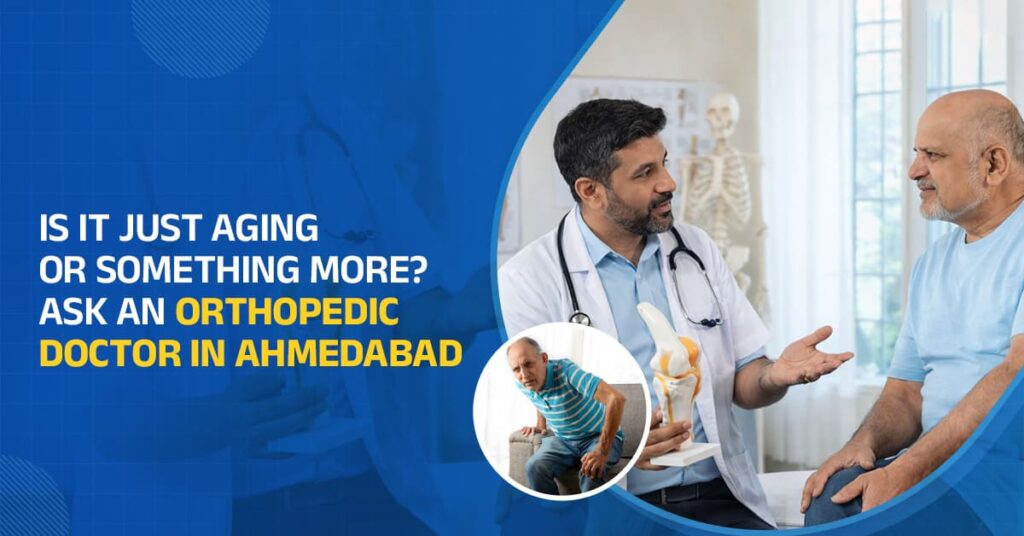
Is it Just Aging or Something More? Ask an Orthopedic Doctor in Ahmedabad

Ever caught yourself saying, “It’s just age,” when your knee clicks, your shoulder feels tight, or your back complains after a long day? Most of us do. We smile, stretch a bit, maybe apply some balm and move on. But here’s the encouraging part. Your body is not just aging; it is communicating. And when you listen early, act early, and get the right guidance, you can stay active, mobile, and comfortably in control for a long time. A little stiffness now and then is common. You sit through a long meeting, stand up, and your knee takes two seconds to cooperate. That is not a crisis. That is a signal. A signal means to pay attention, improve joint care, and give your body a bit more support than before. Aging is not a shutdown switch. It is a maintenance reminder. Think of how you treat your phone after two years. You do not throw it away. You update it, clear space, protect it better, maybe change the battery. Your joints deserve the same energy. Your Daily Life Already Gives You the Signals Joint health is not some complex mystery. It shows up in your routine. If you can walk to the market, climb a few flights of stairs, sit cross-legged sometimes, get up without much struggle, and sleep without pain waking you, your joints are doing a solid job. Celebrate that. Maintain that. If you notice small changes, such as taking the railing while climbing stairs, choosing lifts more often, or avoiding longer walks, that is not bad news. That is early news and useful news. It means you have time, options, and control. Many people only seek help when pain becomes loud. The smarter move is to act when discomfort is still soft. The Positive Truth About Modern Orthopedic Care Here is something uplifting and very real. Joint care today is far ahead of where it used to be. Treatments are more precise. Recovery plans are more personalised. Surgeries, when needed, are more advanced and more predictable than ever. An experienced orthopedic doctor does not just look at your X-ray and write medicines. They look at your lifestyle, movement, goals, and comfort level. The aim is not just to reduce pain. The aim is to restore function and confidence. Not Every Pain Means Something Serious Let’s keep this grounded and positive. Every ache is not dangerous. Sometimes it is just muscle weakness, posture issues, or overuse. For example, if you started morning walks after years of a sedentary routine and your knees feel sore, that is often adaptation, not damage. With the right exercises and guidance, your joints usually respond well. If you spend long hours at a desk and your shoulder feels tight, that often improves with posture correction and mobility work. Bodies are surprisingly forgiving when treated consistently and with respect. Small Changes Create Big Joint Wins Most people expect big treatments but ignore small habits. The small habits are where the magic hides. Simple strength exercises for thighs and hips support your knees. Regular stretching keeps joints mobile. Good footwear reduces unnecessary stress. Balanced weight reduces the load on the knee joints with every single step. Warm up before sports, cool down after. Old school advice, still gold. These are not complicated. They are powerful. Many orthopedic doctors now focus heavily on prevention and guided physiotherapy before any invasive treatment is discussed. That is good news for anyone who wants to stay active without drama. When Checking Early Becomes a Smart Move Seeing an orthopedic doctor is not a sign that something is terribly wrong. It is often just a smart checkpoint, like a joint health audit. People get their cars serviced before a long trip. Getting your joints checked when you notice repeated discomfort is the same logic. Sensible, not scary. A good consultation often gives clarity, like: What exactly is happening What stage is it in What you can improve naturally Which exercises help your specific case What to avoid so things do not worsen Clarity reduces fear. Direction builds confidence. Experience Brings Calm to the Process Patients feel more relaxed when they meet a doctor who has handled thousands of similar cases and explains things in simple language. In Ahmedabad, specialists like Dr Saurin Shah are known for this kind of practical, patient-friendly orthopedic approach, especially in knee and hip care. What patients often appreciate is not just technical skill, but a clear explanation. When a doctor shows you your report, explains what it means in plain terms, and lays out step-by-step options, decision-making becomes easier and lighter. It feels less like a medical maze and more like a guided path. Movement Is Still Your Best Friend One big myth needs a cheerful goodbye. Joint discomfort does not mean you should stop moving. In most guided cases, the right movement is the treatment. Controlled exercise nourishes joints. Muscles act like support staff for your bones. The stronger the support staff, the less pressure on the main structure. Walking, cycling, swimming, and supervised strength training are often recommended because they build support without excessive strain. Motion is lotion. Old line. Still true. Real Life Looks Better When Joints Feel Better Picture this. You get up from a chair smoothly. You climb stairs without planning every step. You travel without worrying about how far you must walk. You play with kids without calculating knee load. That is not a fantasy. That is the result of timely care and consistent joint habits. Orthopedic care is not about making you dependent. It is about making you capable again. Conclusion Aging is a privilege. Staying mobile as you age is a process. The project works best when you stay curious, proactive, and supported by the right expert when needed. If your joints have started sending repeated reminders, treat that as an invitation, not a warning. A conversation with a skilled orthopedic doctor in Ahmedabad can give you answers, options, and a practical plan to stay active.

Scroll to Top