Knee Replacement

Knee Replacement

Latest Advances in Knee Replacement Surgery You Should Know

Have you ever heard someone say, “I’ll wait as long as I can before getting knee replacement surgery”? It’s a common thought. Many people imagine knee replacement as a long hospital stay, weeks of pain and months of struggling to get back on their feet. But the truth is knee replacement surgery has changed dramatically in the last few years. Thanks to new technologies like robotics, 3D-printed implants and minimally invasive techniques, today’s knee replacement is safer, more precise, and offers a much faster recovery than what most people imagine. If you are delaying surgery because of fear, this might be the right time to rethink. Let’s explore the latest advances in knee replacement surgery and what they mean for your recovery and quality of life. 1. Robotic-Assisted Knee Replacement One of the most exciting innovations in recent years is robotic knee replacement surgery. Instead of relying solely on manual tools, surgeons now use computer-assisted systems that create a 3D model of your knee. This allows for highly accurate implant positioning, personalized to your anatomy. Why this matters to you: Better alignment of the joint leads to more natural knee movement. Less damage to surrounding tissues, which means less pain after surgery. Faster recovery and improved long-term implant survival.  Example: Imagine tailoring a suit versus buying one off-the-rack, robotic surgery is like having your knee replacement custom-fitted for you. 2. 3D-Printed and Patient-Specific Implants Gone are the days of one-size-fits-all implants. 3D printing technology now allows for patient-specific implants designed to match the unique shape and size of your knee joint. Benefits of 3D implants: Better comfort and fit Improved joint stability Reduced wear and tear on the implant over time This advancement is particularly helpful for younger, more active patients or those who have complex knee anatomy. 3. Minimally Invasive Surgical Techniques Traditional knee replacement often involved a  relatively large incision and significant muscle dissection. Today, minimally invasive techniques use smaller incisions and cause less soft-tissue damage. Advantages include: Reduced blood loss Lower risk of complications Faster recovery after surgery Smaller scar and better cosmetic outcome 4. Enhanced Recovery After Surgery (ERAS) Protocols Recovery after knee replacement has also become much quicker, thanks to ERAS protocols. What ERAS means for patients: Shorter hospital stays, many patients go home in 1–2 days. Multimodal pain management reduces reliance on strong painkillers. Early physiotherapy starts within 24 hours of surgery, speeding up mobility. This means you can return to your normal routine and even work much sooner than in the past. 5. Computer Navigation and AI-Assisted Planning Artificial Intelligence is now being used to assist surgeons in planning the procedure before stepping into the operating room. Preoperative planning software helps simulate implant positioning and predict post-surgical outcomes. Impact for patients: Greater precision and consistency Fewer chances of revision surgery More predictable results This technology helps surgeons focus on what matters most, achieving a knee that feels and functions as close to natural as possible. 6. Better Pain Control and Rehabilitation Advancements in anesthesia and pain management have made recovery far more comfortable. Techniques like nerve blocks and targeted pain relief help patients start walking earlier and reduce anxiety about post-operative pain. Rehabilitation has also evolved: Customized physiotherapy plans Use of digital apps and tele-rehab to track progress at home Focus on patient education to improve long-term outcomes Why Staying Updated Matters Many patients delay surgery due to fear of pain or long recovery, not realizing how far medical science has come. Understanding these advances can help you make an informed decision and improve your quality of life sooner rather than later. Expert Care for Modern Knee Replacement Successful knee replacement is not just about using the latest technology, it’s also about choosing an extensively experienced surgeon who knows how to apply it effectively. With over 21 years of expertise and more than 15,000 successful surgeries(as on July, 2025), Dr. Saurin Shah is a trusted knee replacement doctor in Ahmedabad. He specializes in advanced techniques such as robotic-assisted surgery and patient-specific planning to ensure precise and predictable outcomes. Combining modern technology with compassionate, personalized care, he helps patients regain mobility and return to an active lifestyle with confidence. Common Questions Patients Ask Robotic or computer-assisted surgery be painful? No, the technology is used to improve precision and minimize tissue damage which often results in less pain compared to conventional surgery. Does using advanced technology make the surgery more expensive? While robotic surgery can be slightly more expensive, many patients feel the benefits like improved function, reduced complications and faster recovery are well worth the investment. Will I still need physiotherapy? Yes. Technology helps the surgery go smoothly but physiotherapy remains key for regaining strength and motion.

Knee Replacement

Choosing a Best Knee Replacement Surgeon in Ahmedabad: Tips for a Confident Decision

Living with knee pain can change how you approach life. Even small activities like walking to the kitchen, climbing stairs or playing with grandchildren can feel like major challenges. When you finally decide it’s time for a knee replacement, one of the biggest questions is: “Who can I trust to guide me through this journey?” Choosing the right surgeon can make all the difference not just in the surgery itself but in how smoothly you recover and get back to the activities you love. The good news is, Ahmedabad has skilled orthopedic surgeons who combine experience, modern technology, and patient-focused care. Here’s how you can confidently choose the best knee replacement doctor for your needs. Experience and Expertise That You Can Trust One of the first things to consider is the surgeon’s experience. A surgeon who has performed thousands of knee replacements knows how to handle every situation calmly and efficiently. Their expertise ensures that your surgery is precise, safe and tailored to your unique needs. Patients often notice the difference immediately smooth surgery, minimal pain and confidence in the process. Experienced surgeons also anticipate challenges before they arise, just like a seasoned driver navigates tricky roads with ease. When you feel that kind of assurance from your doctor, it sets a positive tone for your recovery from day one. Advanced Technology for Better Outcomes Modern knee replacement is no longer about long hospital stays or slow recoveries. Today, many knee replacement surgeons in Ahmedabad use advanced technology like robotic-assisted surgery and computer navigation. These tools allow the surgeon to plan and perform your surgery with unmatched precision, ensuring the implant fits perfectly and functions naturally. Imagine getting a tailored suit instead of an off-the-rack one, the difference is noticeable. Similarly, advanced knee replacement techniques help your new joint feel more natural, reduce discomfort and support faster healing Hospital Facilities That Support Healing The environment in which your surgery takes place matters just as much as the surgeon. Hospitals with dedicated joint replacement units, modern operating theaters, and well-equipped rehabilitation facilities create a smoother experience. From shorter hospital stays to comprehensive physiotherapy programs, the right infrastructure can make recovery easier, safer and more comfortable. When patients know that everything they need is available under one roof with expert care, supportive staff and rehab programs they feel confident and motivated to focus on healing. Patient-Focused Communication and Guidance Choosing the right surgeon is also about how they communicate with you. Surgeons who explain your procedure clearly, answer questions patiently and provide personalized guidance make the entire process less intimidating. Many patients share how reassuring it is when their doctor walks them through what to expect, how to move safely, which exercises to do and when to resume daily activities. It’s this kind of guidance that turns a surgical experience into a positive, empowering journey. Positive Patient Experiences Hearing from people who have successfully undergone knee replacement can be uplifting. Patients often share stories of regaining mobility, returning to hobbies and feeling independent again. When you see others walking confidently, climbing stairs without pain, or enjoying long walks with family, it reinforces the hope that your knee replacement can transform your life too. Lifestyle Support for Long-Term Success A great knee replacement surgeon doesn’t just perform surgery they guide you through lifestyle adjustments that support your recovery and long-term joint health. Proper exercise routines, safe movement techniques, and simple daily adjustments ensure that your new knee continues to function well for years. Even small changes like using a supportive chair, avoiding low seating, or practicing gentle stretches can make a huge difference in comfort and mobility. With the right guidance, patients often find themselves returning to their favorite activities faster and more confidently than they expected. Choosing the Right Surgeon in Ahmedabad When looking for a knee replacement doctor, consider these positive markers: Experience and specialization: Surgeons who focus on knee replacement bring precision and reliability. Advanced techniques and technology: Robotic-assisted or minimally invasive surgery enhances outcomes. Comprehensive hospital care: Modern facilities and structured rehabilitation support your recovery. Patient-centric communication: Surgeons who listen, explain and guide make the journey smoother. Track record of positive patient experiences: Success stories can reassure and inspire you. By focusing on these aspects, you are choosing a surgeon who prioritizes your well-being, recovery and long-term quality of life. Expert Care You Can Rely On Dr. Saurin Shah, is one of the leading knee replacement surgeon in Ahmedabad, combines over 21 years of experience with modern surgical techniques. His approach focuses on precision, patient comfort and structured rehabilitation to ensure that every patient regains mobility and confidence. Patients appreciate how he explains every step, listens carefully and tailors care plans to individual needs making the entire journey from consultation to recovery smooth and reassuring. Final Thoughts Choosing the right knee replacement surgeon is more than a medical decision, it’s a step toward regaining freedom, independence and confidence in daily life. By selecting an experienced, skilled and patient-focused surgeon with access to advanced technology and supportive hospital facilities, you can look forward to a positive, empowering recovery experience. If you are considering knee replacement surgery, scheduling a consultation with an experienced orthopedic surgeon in Ahmedabad can help you understand your options, prepare for surgery and take the first step toward a more active, pain-free life.

Knee Replacement

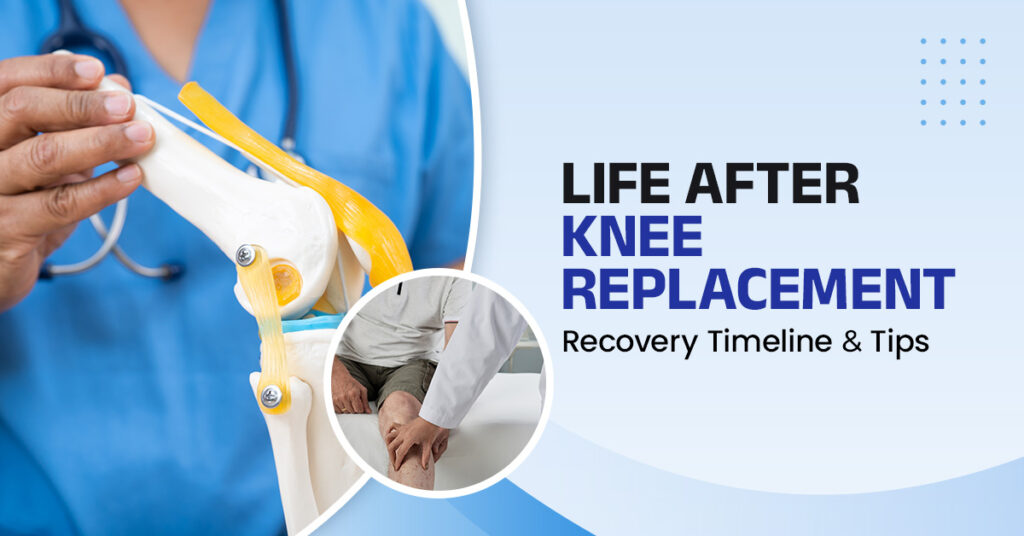
Life After Knee Replacement: Recovery Timeline & Tips

For many people living with knee pain, even small daily activities like walking to the kitchen, getting up from a chair or climbing a few stairs can feel like a challenge. Over time, this pain can lead to frustration, loss of independence and even affect mental well-being. Knee replacement surgery offers a way to regain mobility and return to a more active lifestyle. But patients often ask: What happens after surgery? How long will it take before I can walk normally? This blog will guide you through the recovery timeline after knee replacement surgery, address common concerns, and share practical tips to make your healing process smoother and more predictable. Weeks 1–2: Beginning Your Recovery The first two weeks are the most crucial for setting the tone for your recovery. Most patients are encouraged to take their first steps (with support) within 24–48 hours of surgery. Early mobilization reduces stiffness and prevents complications like blood clots. Here’s what to expect during this phase: Pain Management: Medications are prescribed to keep pain under control and help you participate in physiotherapy comfortably. Gentle Exercises: Simple exercises like ankle pumps, quad sets and gentle knee bends help improve blood flow and prevent stiffness. Wound Care: The incision site must be kept clean and monitored for any signs of infection. Advice: Prepare your home environment in advance, keep frequently used items within reach, use a sturdy chair with armrests and arrange help for cooking and cleaning during the first two weeks. Weeks 3–6: Building Strength and Confidence By the third week, you will likely notice reduced pain and improved mobility. This is the phase where structured physiotherapy plays the most important role in your recovery. Focus areas include: Physiotherapy Sessions: These help restore muscle strength and joint flexibility. Skipping sessions can delay recovery. Walking Practice: Gradually increase walking distance each day. A walker or crutches may still be required initially but will be phased out as you progress. Managing Swelling: Continue icing and elevating the leg when needed. Advice: Set small, realistic goals like walking across the room without support or climbing a few stairs safely. Achieving these goals boosts confidence and motivation. Weeks 7–12: Resuming Daily Activities During this stage, most patients regain independence in performing daily tasks such as cooking, dressing, or light household work. Key milestones in this phase: Walking Without Support: Most patients can walk independently. Improved Endurance: Standing for longer periods and taking short outdoor walks becomes easier. Reduced Pain and Stiffness: The knee continues to feel more natural as swelling subsides. Advice: Stick to your exercise routine even when you feel better. Consistency now ensures long-term benefits from your knee replacement. 3–6 Months: Returning to a Normal Lifestyle By three to six months, most patients experience a significant improvement in quality of life. Many return to activities like traveling, light sports (walking, swimming, cycling) and social events. Focus during this phase: Strength Training: Continue exercises to maintain muscle strength. Weight Management: Keep your weight within a healthy range to reduce stress on the joint. Follow-Up Visits: Regular checkups with your surgeon ensure the knee is functioning well. Advice: If you enjoy activities such as dancing, golf, or yoga, consult your doctor before resuming them. Proper guidance helps you avoid injuries. Do’s and Don’ts After Knee Replacement Do:   Follow your physiotherapy schedule diligently Maintain good posture and use supportive footwear Keep your surroundings safe to avoid accidental falls Don’t:   Sit cross-legged or squat until advised by your doctor Skip follow-up appointments Return to running without advice or high-impact sports Common Patient Concerns Addressed When can I drive again? Most patients can drive 4–6 weeks after surgery, once they can bend the knee comfortably and react quickly. Can I kneel or sit cross-legged? Some patients can but it varies based on flexibility and type of surgery. Always confirm with your surgeon before trying. What if I feel stiffness in the mornings? Gentle stretches before getting out of bed can help. Stiffness usually improves as you become more active. Will my knee feel completely normal? Modern implants are designed to feel as natural as possible. With proper rehab, most patients report excellent function and minimal pain. Your Recovery Journey Matters Recovery after knee replacement is not just about the surgery, it is a combination of expert surgical care, structured rehabilitation and your active participation. Every patient’s journey is unique, but following the recommended timeline and tips can make your recovery smoother and faster. With over 21 years of experience and more than 15,000 knee replacement surgeries, Dr. Saurin Shah a leading knee replacement surgeon in Ahmedabad and his team at Walk Well Joint Replacement Centre focus on providing end-to-end care from pre-surgical planning to post-operative physiotherapy helping patients regain mobility with confidence. If you are exploring knee replacement as an option or are concerned about your recovery, consulting an experienced orthopedic surgeon can make a significant difference in your long-term outcome.

Knee Replacement

Knee Replacement Cost in Ahmedabad What’s Included and How to Plan

Knee pain greatly impacts the quality of one’s life, daily activities such as walking, going up and down stairs, or standing for long times become very hard. When Oral medicine, exercise or physiotherapy interventions do not bring about relief, knee replacement surgery steps in as a very practical and often a necessary solution.   Also it is  very important to choose the right surgeon but at the same time in the case of knee replacement in Ahmedabad being aware of the costs is very much so  which also plays a vital role in budgeting and planning for post operation recovery.    Why Ahmedabad for Knee Replacement?   Ahmedabad has become a growing medical destination in India which is very much so in the field of orthopedics. The city is to which is a pool of very skilled orthopedic surgeons, state of the art hospitals, and affordable health care options. If you are looking forward for a robotic knee replacement or a more traditional surgical procedure Ahmedabad puts forth a great balance of quality and affordable care.    Which factors determine Knee Replacement cost in Ahmedabad?  While price may vary between hospitals, in general there are certain key factors which determine the total cost:  Type of Surgery: Total knee reconstruction is a more complex and expensive procedure.  Surgical Technique: Advanced approaches like robotic and minimally invasive surgeries may see higher costs but they also offer faster recovery and better precision.  Type of Implant: The cost will depend on the brand and type of implant used  Doctor’s Experience: More senior surgeons may charge for greater consultation and surgical Fees.  Hospital Category: Private multi-speciality hospitals in general do more so than Government or charitable ones.  Room Category: In some cases the type of hospital room (general, Twin sharing vs. Deluxe Room) may also play a role in total cost.  Pre-Surgery Tests: Other than routine test(required in some cases only)Diagnostic and blood tests may increase the total cost.  Post-Surgical Support: Physiotherapy sessions, medication, and follow up visits may be excluded in the package.  What do we see in terms of costs?  Understanding which services are included in knee replacement cost will help you avoid surprise bills later. In Ahmedabad most reputable hospitals present packages which include:.  Initial consultation and diagnostic tests   Surgeon and anesthetist fees   Operation theatre and nursing charges   Implant cost (knee prosthesis)   Hospital stay and meals   Medications and surgical consumables   Physiotherapy during the Hospital Stay.    In certain cases, we see that post discharge follow up and home physiotherapy is included in premium packages which is why it is a good idea to ask about it in advance.   What’s Usually Not Included?  Even though a package may have everything included, check what has to be paid for separately. Also see which of these are left out:.  Present on at present health issues (diabetes, high blood pressure etc…)   Prolonged hospital stays (outside of what is included in the standard package).   Upgrades in room category   Specialized implants (if requested)   Additional physiotherapy sessions post-discharge    How to Budget for Your Knee Replacement Surgery.  Here is what you can do to better control the cost:  1. Check into Health Insurance Coverage.  Many insurance policies include coverage for joint replacement surgeries. See what your policy’s full or partial coverage is and if it includes cashless claims.  2. Request full quote.  Request from your surgeon or hospital for a detailed breakdown of the cost. This will enable you to compare between different hospitals better.  3. Check out Payment Options.  Some hospitals provide no cost EMI’s and also health care cards from third parties. These in turn may help you in better management of your payments.   4. Plan of Action for Recovery Expenses.  Don’t leave out physiotherapy, mobility aids which include walkers, nutritional supplements, also that you may need time away from work.  5. Take note of Timing.  At times what we put forward for surgery in some months or at insurance renewals does not go through or we do not see the results we expect. But we can plan better.  What Sets Dr. Saurin Shah Apart?   When it comes to the selection of the right knee replacement surgeon in Ahmedabad, Dr. Saurin Shah stands out for his patient centered approach, extensive surgical experience, and transparent pricing.   In the area of both traditional and robotic knee replacements, Dr. Shah reports on in great detail pre op counseling, post op support, and long-term joint health. He aims beyond pain relief to restore mobility, independence, and confidence.    Final Thoughts   In Ahmedabad to really get a handle on knee replacement cost is key for planning your surgery but at the same time choosing the right doctor is equally as important. With the right info, financial planning, and expert care, you can go into your surgery at ease and come out ready for a more active, pain free life. 

Knee Replacement Guide
Knee Replacement

Everything You Need to Know About Knee Replacement Surgery

Knee replacement is a big step for people that are dealing with chronic knee pain or joint issues which impact your day to day life. It is important to know the process, the benefits, and what to expect. In this guide we will go over it all related to knee replacement from the surgery through to recovery and how to choose which surgeon is the best fit for you.  What is Knee Replacement?  Knee replacement that we also term as arthroplasty is a surgical procedure we perform when a knee joint is very much damaged or worn out. We do this for patients that have knee damage from conditions like osteoarthritis, rheumatoid arthritis or post traumatic arthritis which has not responded to conservative treatment options of medication, physical therapy, and lifestyle changes.  During the process we remove which is damaged in the knee joint and put in a prosthesis.  The prosthesis is made up of a variety of materials which include metals and plastics and is designed to perform like a natural knee.  Types of Knee Replacement Surgery  There is a variety of knee replacement surgeries which are best for different types of knee damage and patient issues:.  Total Knee Replacement (TKR)  In this procedure both femur and tibia in the knee joint are replaced. TKR is a solution for patients that have very wide scale damage to the knee.  Partial Knee Replacement (PKR)  Also known as unicondylar knee replacement which is a procedure that only involves replacement of a part of the knee joint when damage is present in a specific area.  Bilateral Knee Replacement  In many cases we see fit to do both at once. We put forward that which is for patients with severe arthritis or degeneration in both knees.  Minimally Invasive Knee Replacement  In this type of surgical procedure we make small incisions which in turn leads to faster recovery and less post op pain. It is for some patients’ needs which is great but not all are good candidates.  Is Knee Replacement Surgery Safe?   Safety and Success Rates  Knee replacement has a large success rate which reports that over 90% of patients do see great pain relief and better mobility post op. Also the procedure is very safe and we are seeing with the use of tech like robotics and digital assistance the risks associated are decreasing.  Possible Risks  Also like any other surgery, knee replacement surgery does so also include the following in its’ set of risks:.  Infection: At times infection does happen at the surgical site.  Blood Clots: In some cases blood clots will form in the legs’ after surgery this also accounts as a reason for which doctors may put patients on blood thinners.  Implant Failure: In a rare case report of what we have put in as artificial knees which in fact stopped working which in some instances may have the issue resolved through more surgical procedures.  What does a Knee Replacement Surgery cost in India?  In some cases in India knee replacement is cheaper than in other countries.  Also the cost may vary which in turn is due to the type of knee implant used, the hospital, and the surgeon’s skill.  Average Costs  Knee Replacement Surgery Cost: Typically between the range of ₹1.5 to ₹4 lakh.  Hospital and Surgeon Fees: Hospital and surgeon costs for your stay will vary by the reputation of the hospital and the surgeon’s experience.  Post-Surgery Rehabilitation: Physiotherapy and medication are covered which may increase the price but they are necessary for recovery.  Insurance Coverage  Many insurance plans which cover knee replacement are available, but it is important to check the terms with your insurer.  Choosing the Right Knee Replacement Surgeon  Choosing which surgeon to go with is a very important decision on your knee replacement journey.   Here’s what to look for:.  Experience and Credentials: Choose a surgeon that is a specialist in knee replacement and has experience with the type of surgery you will have (total, partial, or minimally invasive).  Patient Reviews: Check out what past patients had to report they are the best source of info on a surgeon’s skill and care.  Hospital Affiliation: Make sure your surgeon is at a reputable institution which has the best medical equipment and staff.  In Ahmedabad which has the best results we leave it to you to consult the top total knee replacement surgeons in Ahmedabad. We leave it open for you to choose the best.  Right Time for Knee Replacement Surgery:   At the time of considering knee replacement the following apply:.  Chronic Pain: Pain which is persistent despite we’ve tried physical therapy or medications at which we see.  Mobility Issues: Difficulty in walking, climbing stairs, or with daily activities due to knee pain.  X-ray Results: Severe degeneration of knee joints as shown in X-rays which includes bone-on-bone contact.  Is Delaying Surgery Affects You  Delaying the surgery may cause progress in joint degeneration, resulting in more in depth surgical procedures and longer recovery times. Also with that extra time of pain your overall health may see very negative effects.  Before undergoing Knee Replacement Surgery.  Before your surgery it is important to do the following:.  Medical Check-Up: Run all the tests which include blood work and X-rays to assess your health.  Medications: Discuss with your health care provider all of your medications which may include blood thinners that will require you to stop use prior to surgery.  Weight Management: Maintain a healthy weight to reduce stress on your knees and improve results from surgery.  Preoperative Physical Therapy: Improving knee muscles pre operatively may better post op recovery.  The Knee Replacement Procedure   Step-by-Step Process  Anesthesia: In most cases of knee replacement surgery spinal anesthesia is used which leaves the patient aware but with no feeling from the waist down.  Surgical Steps: Surgeon removes degenerative cartilage and bone from the knee joint and in its place puts in a prosthesis.  Duration: Surgery usually lasts 1 – 2 hours.  Post-Surgery Monitoring: Postoperative Monitoring:.  After the procedure patients

Scroll to Top